The project shell keeps the work in one place
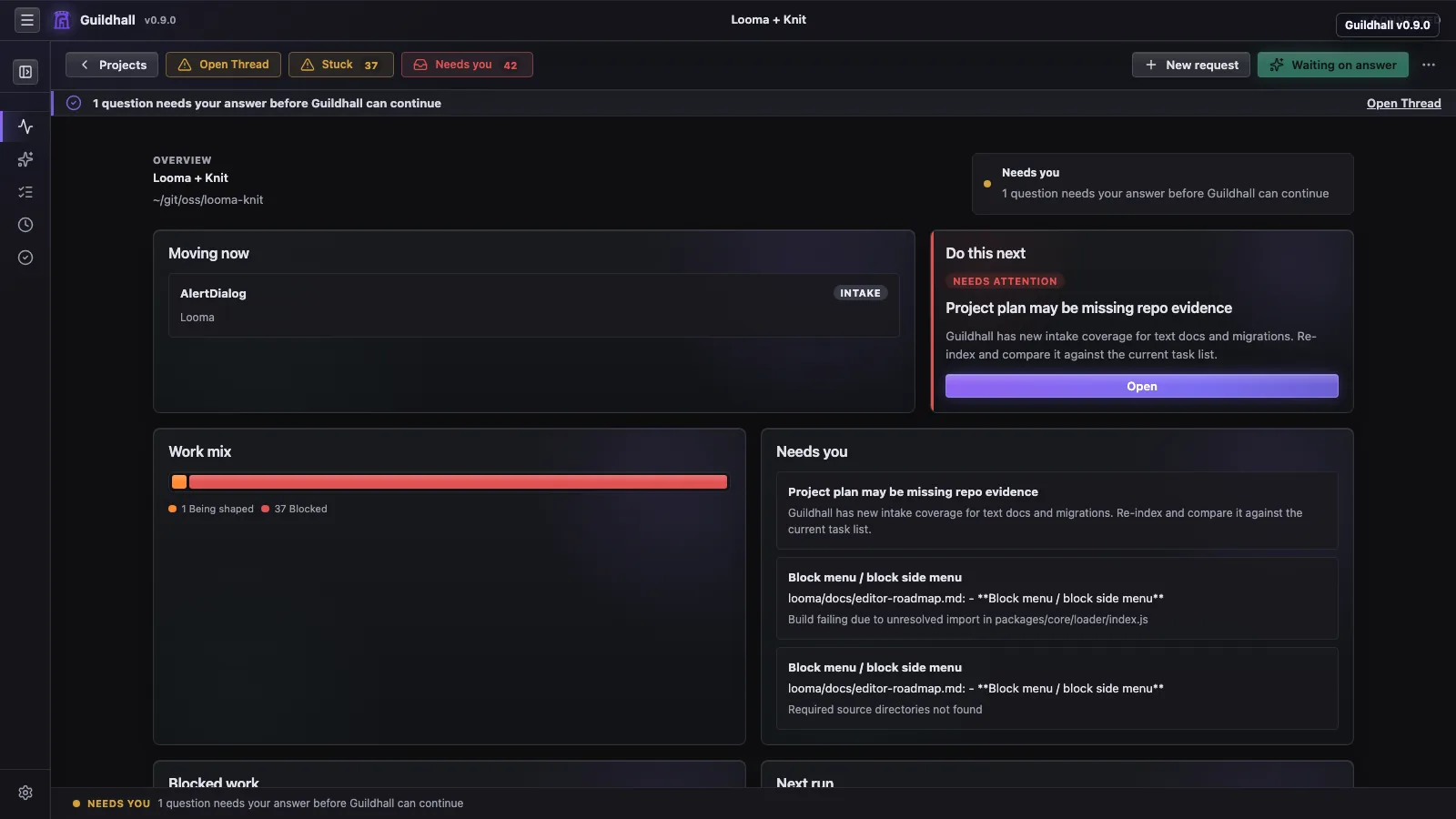
Once you open a project, Guildhall shifts from "service over projects" into "show me what is happening." Setup, active work, reviewer feedback, and your next decision live in one place.
The views that matter most
- Overview: the first stop. It pulls together the next action, work mix, attention items, health, blocked work, recent activity, and Git Story signals without making you inspect every view first.
- Thread: the request and decision view. Setup prompts, New Request routing, pressure-test questions, spec approvals, live worker trouble, and “you need to answer this now” all gather here.
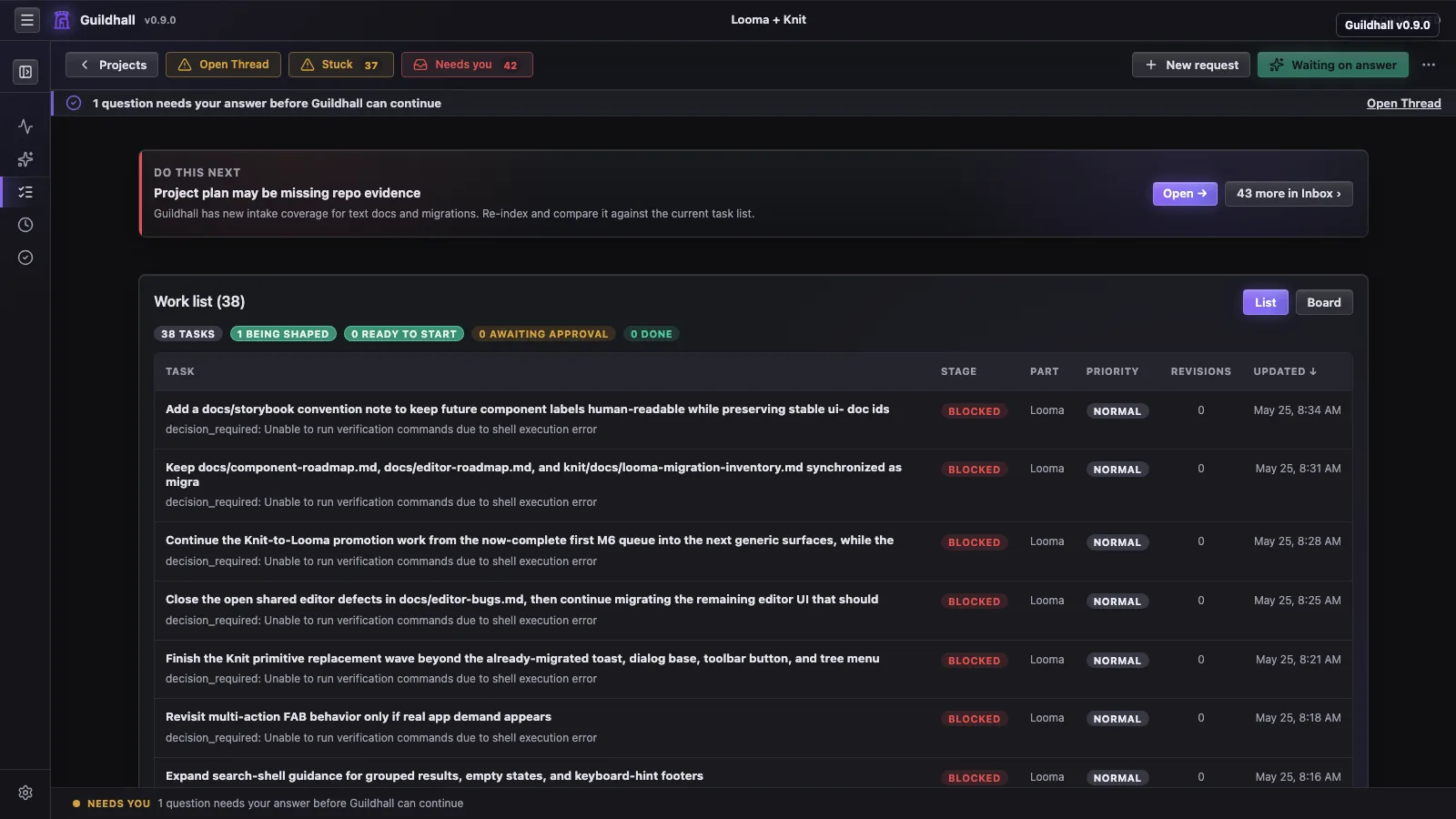
- Work: the queue and movement view. This is where you check whether the project is actually moving.
- Closure: the current-work verdict view. It tells you whether the work Guildhall is tracking now is actually closed, including unresolved Git stories. It is not a version or milestone picker yet.
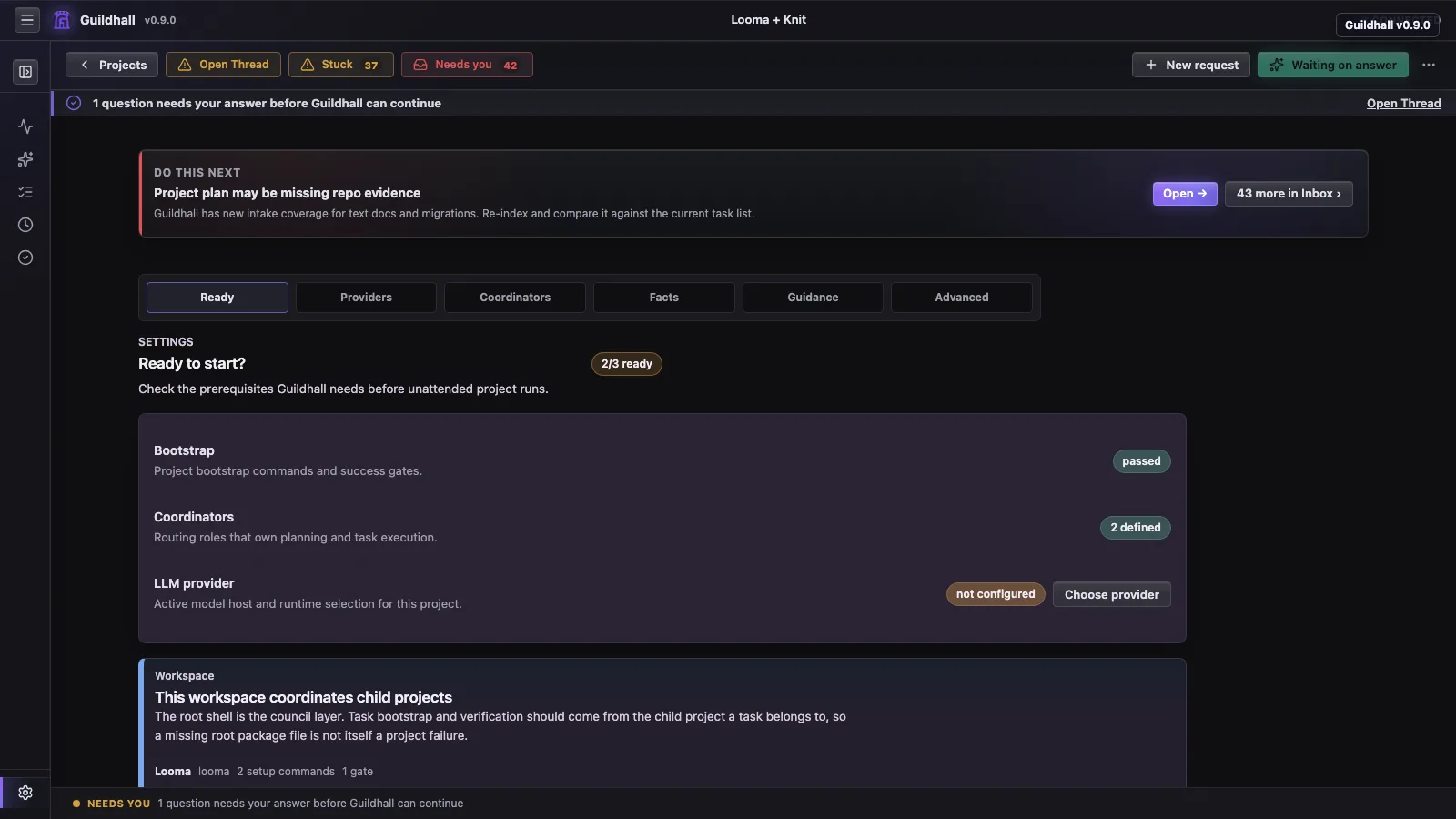
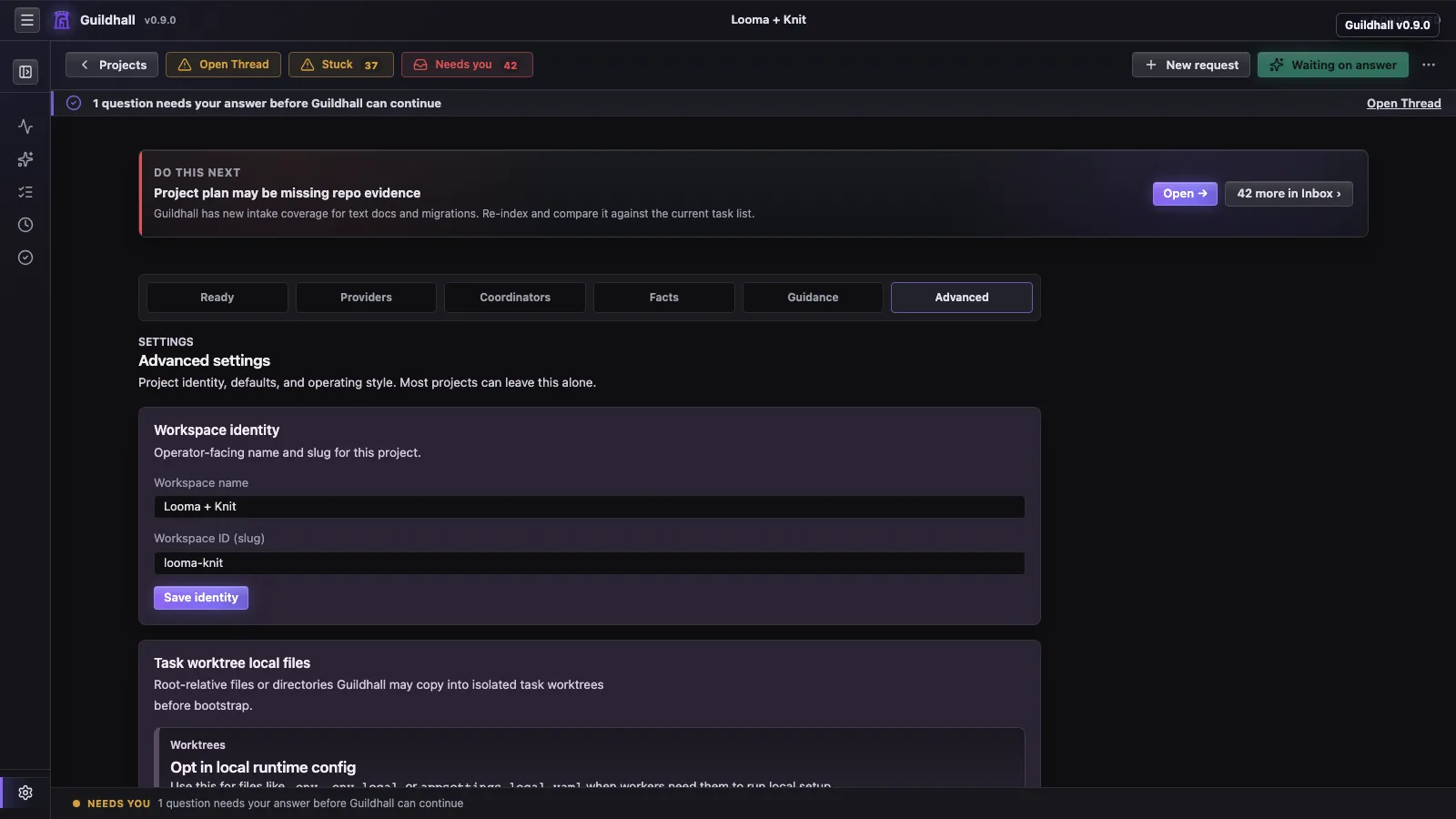
- Settings: setup and behavior. Ready checks, Providers, Coordinators, Facts, Memory, Re-intake, Advanced settings, and the controls that decide how much autonomy Guildhall gets.
What the shell is optimizing for
- Make the next real action obvious
- Let you understand the project from Overview before you dive into Thread or Work
- Keep your questions and the run's progress in the same story
- Surface closure and reviewer state before it becomes an unpleasant surprise
- Keep Git closure visible when work is dirty, local-only, deferred, pushed, waiting on a PR, or blocked by a conflict
- Let you drill into transcripts and provenance without leaving the shell
Current strengths
- Overview as a live project summary
- Left-rail shell structure
- Task drawer inspection model
- Closure, reviewer, and Git Story visibility
- Sparse project controls with one primary Start or Stop path
- Re-intake when old project state needs to be reconsidered
Start, stop, and blockers
The top bar is for the main action, not every possible status. Start or Stop should remain easy to find. If the project cannot move yet, the control is disabled and the notice below it names the blocker with a route to the exact question, spec, migration, or task that needs attention.
Generic labels are not enough. A card that says the project needs you should also tell you what it needs and where to answer.
Thread as the intake view
Thread is where New Request routing and Pressure-Test Intake show up. A broad release or feature ask becomes a New request card, then a sequence of Pressure-test question cards. Each question is answered in place, one at a time, with evidence and the reason Guildhall is asking.
Those answers are not trapped in the transcript. They update persisted intake state so the eventual spec can name assumptions, decisions, deferrals, and the domains that were actually covered.
Re-intake stale project state
Use Settings -> Re-intake when a project has old imported tasks, stale blockers, or cards that no longer match what the repo and docs say. Re-intake reads current evidence, compares it with accepted tasks and progress, and drafts a cleaner plan for review. Empty drafts cannot be applied, and applying a re-intake records why the project plan changed.
Closure as the current-work view
Closure treats Git state as part of the verdict. Dirty files, local commits, branches without upstreams, pending PRs, skipped merges, stale task worktrees, and unknown inspection failures are blockers until you close them or deliberately mark them local-only or deferred.
For now, Closure means "the current Guildhall-tracked work," not "the next named software release." Future release or milestone grouping can sit on top of the same checks once Guildhall has an actual release target to point at.